Subterranean termite treatments establish chemical and bait barriers that eliminate subterranean colonies before structural damage impacts wall studs, trusses, and baseboards. Liquid termiticide trenching uses…
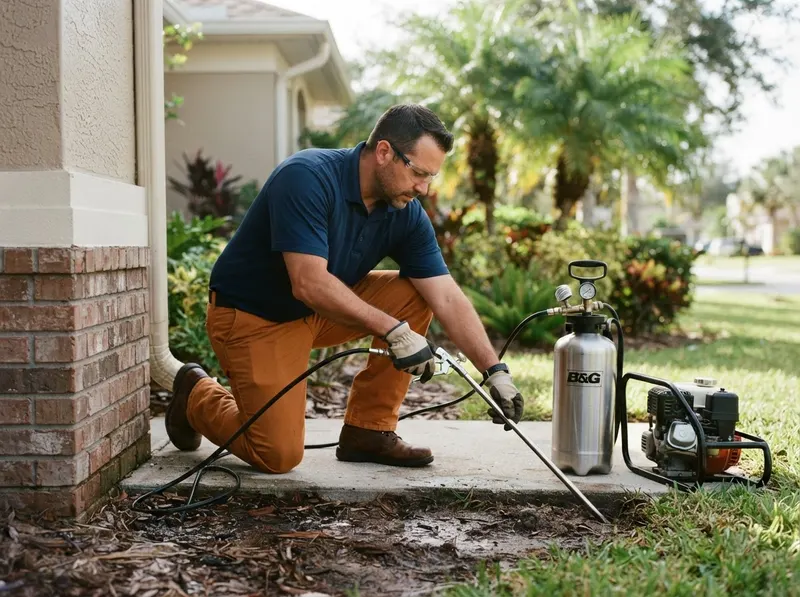
Subterranean termite treatments establish chemical and bait barriers that eliminate subterranean colonies before structural damage impacts wall studs, trusses, and baseboards. Liquid termiticide trenching uses non-repellent active ingredients like fipronil applied at labeled volumes of 4 gallons per 10 linear feet. When foraging insects pass through treated soil zones, they transfer the compound throughout the nesting network, neutralizing workers and the reproductive queen. In contrast, in-ground monitoring and bait systems use insect growth regulators placed every 10 to 15 feet around the drip line to disrupt the molting cycle across an entire colony.
In older historic properties along McGregor Boulevard and in the Dean Park Historic District, crawlspace foundations and heart-pine subflooring face severe moisture exposure from the Caloosahatchee River. These raised structures often require specialized sub-slab drilling and interior pier trenching. Slab-on-grade developments across Gateway, Paseo, and Botanica Lakes encounter termite pressure through expansion joints, patio abutments, and conduit entry points. High ground-water tables and rainy summer seasons in areas near the Six Mile Cypress Slough Preserve cause heavy moisture build-ups around foundations, encouraging native *Reticulitermes* and destructive Asian or Formosan termite species to construct shelter mud tubes over stem walls.
Selecting the right defensive measure depends on foundation type and hardscape placement. Liquid soil treatments create an immediate lethal zone around perimeter footings, whereas bait stations fit properties wrapped in pavers, pool enclosures, or dense landscaping where trenching would disturb roots or decorative concrete. In-ground baiting requires scheduled monitoring intervals, while liquid barriers deliver continuous continuous protection lasting 5 to 8 years. Routine visual examinations confirm protective barrier integrity and locate exploratory mud tubes before termites penetrate framing lumber.
Every job gets a firm, written price after a free on-site visit.
Tell us about your subterranean termite treatment job in Fort Myers and we'll send a clear, written quote, usually the same day.
 Blue Timber Pest Control